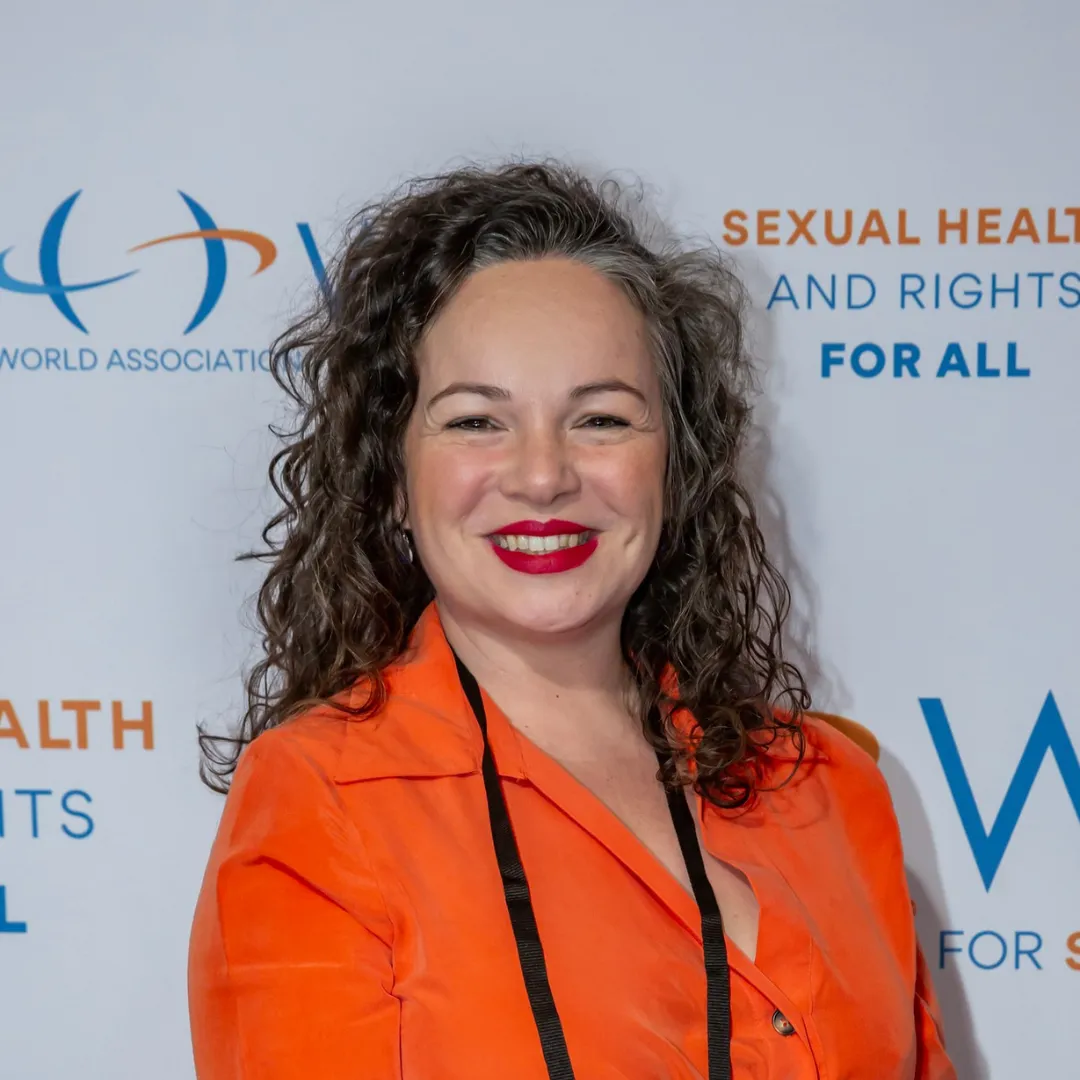
Am I in Perimenopause? What the Symptoms Mean
You've googled your symptoms at 2 am, when you woke up soaking wet, just after browsing for better cotton PJs, because maybe it is just the PJs? (Dr Rudolph sees women gaslighting themselves out of menopause symptoms all the time!). You've wondered whether the exhaustion is a thyroid thing, an iron thing, a getting-older thing, or whether you're simply not coping as well as you used to. You've probably also had the experience of describing all of it to someone and being told you seem fine.
If that's familiar, you're not imagining it, and you're not alone. Perimenopause can begin years before periods stop, and its symptoms overlap with so many other conditions that women routinely spend years being investigated for everything except the thing that's actually happening.
Over the past few weeks, The Great Equalizer, a SAPA award-winning South African podcast hosted by journalist Sam Herbst and Charlene Armstrong, has run a six-part series called TGE Talks: Menopause. Five of the guests are members of the My Sexual Health Team, and between them they cover the medical, sexual, psychological and physical sides of this transition. Dr Louisa Albertyn, Dr Mareli Fischer, Dr Heather Blaylock, Sue Fuller-Good and Dr Elna Rudolph.
Here’s what came out of the series, and where to listen in full.
Starting with a story, not a symptom list
The series opens with Aisha O'Reilly, podcaster, content creator and host of The Whole Mama Show, talking about medically induced menopause.
Her story is compelling. Medically induced menopause is one of the least-discussed routes into this transition: it can arrive abruptly, at an age nobody expects it, and without the gradual runway that lets other women slowly work out what's happening to them. Aisha navigated it alongside complex PTSD following the birth of her third child, and speaks frankly about what it meant for her sexual health, her relationship and her sense of herself.
Around that conversation, the episode does something the rest of the series builds on: it questions how midlife women, and women's health beyond childbearing age, get talked about in the first place.
Watch here:
🎧 Listen to Episode 1 with Aisha O'Reilly
"Is this perimenopause, or is it something else?"
Dr Louisa Albertyn, a general practitioner with a special interest in sexual health, spends the second episode on the question most women actually arrive with: what counts as normal, and what deserves investigation.
Perimenopause symptoms sit on top of, and can be confused with, PMS, PMDD, PCOS, ovarian cysts and endometriosis. They also present differently depending on whether you're in your late thirties, forties or fifties, which is part of why a woman of 38 describing textbook perimenopausal changes is so often told she's too young.
The episode also covers postpartum hormonal shifts, which get similarly little airtime and are similarly disorienting.
Key insight: "Too young for perimenopause" is not a diagnosis. The transition commonly begins in the late thirties to early forties and can run for several years before periods stop.
🎧 Listen to the episode with Dr Louisa Albertyn
Sex, desire and what actually changes
The third episode takes on the assumption that menopause is where a woman's sex life ends. Dr Heather Blaylock, a medical doctor with a special interest in sexual health, trained at the European School of Sexual Medicine and a Fellow of the European Committee of Sexual Medicine, is direct about how much of that is myth, and how much is a real, treatable physical change being left untreated.
The conversation separates libido from desire. Conflating them leads people to conclude something is broken when it isn't. It covers vaginal dryness and genitourinary changes plainly, without the euphemisms that usually make this subject harder than it needs to be. It also treats pain during sex as a symptom with causes, rather than something to get through.
Key insight: Desire changing is not desire disappearing. Most of the physical changes that make sex uncomfortable after 40 respond well to treatment, but only if someone brings them up.
🎧 Listen to the episode with Dr Heather Blaylock
The part nobody warns you about
Episode four is, for a lot of listeners, the one that lands hardest. Dr Mareli Fischer, a clinical psychologist working in Cape Town, talks through the mental health side of the transition: anxiety, low mood, brain fog, irritability, and the specific and disorienting experience of no longer feeling like yourself.
Midlife tends to arrive with ageing parents, teenagers, career pressure and depleted reserves all at once, and hormonal fluctuation lands on top of that. Mareli is also clear that self-care strategies have a ceiling, and that recognising when to seek professional support is a skill worth having rather than a last resort.
Key insight: Feeling emotionally unrecognisable to yourself during perimenopause is a documented phenomenon, not a character failure.
🎧 Listen to the episode with Dr Mareli Fischer
Muscle, bone and pelvic floor
Episode five turns to the body. Sue Fuller-Good, a physiotherapist with over two decades in pelvic health, chronic pain and sexual health, and a mindfulness coach and author, cuts through the noise on midlife exercise, and does it without the guilt that usually comes attached.
The conversation covers what happens to muscle mass, metabolism and bone density as oestrogen declines, why strength training becomes disproportionately important in this window, and how protein intake supports the process. It also spends useful time on the pelvic floor, including the point that Kegels are not the whole story and that pelvic floor health matters long past the postpartum years.
Most usefully, it deals with realistic habits. Not the ideal routine, but the one that survives a full week.
Key insight: Strength training in perimenopause isn't about body composition. It's about protecting bone density and muscle mass at exactly the point in life when both begin to decline.
Watch here:
🎧 Listen to the episode with Sue Fuller-Good
What we still don't know
The final episode steps back from symptoms and treatment and asks a different question: how much of this do we actually know?
Dr Elna Rudolph, Clinical Head of My Sexual Health, closes the series by working through audience questions gathered across the previous five episodes, and being straight about where the evidence is solid, where it's still emerging, and where it barely exists.
That gap is wider than most people assume. Menopause affects roughly half the population and remains substantially under-researched, which is part of why the advice on strength training, protein, brain fog, hormone therapy and sexual wellbeing so often contradicts itself depending on who you ask. The conversation covers why women's health has historically been deprioritised in research funding, and how little of the existing evidence base includes African women, which matters for anyone trying to apply it here.
It also returns to painful sex, low desire and intimate wellbeing in midlife, this time from the angle of what the research can and can't yet tell us.
Key insight: If the menopause advice you're getting sounds contradictory, that's often because the research itself is unsettled, not because you're failing to find the right answer.
🎧 Listen to the final episode with Dr Elna Rudolph
The Multi-Disciplinary Approach
Each of these practitioners is describing one experience from several angles. The woman who can't sleep, whose sex life has become uncomfortable, who feels unlike herself and whose body is changing shape isn't having four problems. She's having one transition, and she'll usually get further with input from more than one discipline than with any single one working alone.
That's the model My Sexual Health is built on. A doctor investigating symptoms, a psychologist working on mood and identity, a pelvic health physiotherapist addressing pain and function, talking to each other rather than sending a patient in circles.
Common Questions
How do I know if I'm in perimenopause or if something else is going on?
Often you can't tell from symptoms alone, which is exactly why it's worth investigating with a credible sexual health provider who actually believes in taking bloods rather than just making your symptoms off as “normal” when you clearly feel anything but “normal”. Symptoms overlap significantly with thyroid conditions, iron deficiency, PCOS, endometriosis and PMDD.
Is 38 too young for perimenopause?
No, but at that age your symptoms are more likely due to another medical condition. Being told you're too young is a common experience, and it's a reason many women go a long time without support. It is actually really detrimental for your wellbeing and longevity to leave early menopause untreated. If you are not certain, ask for blood tests to confirm whether you are in menopause. Just remember: hormones change over time, so even if your hormones show up as “normal” on blood tests, the change in hormones might still be the reason for your symptoms. You will need a clinician who will listen and guide you through the process with wisdom, rather than being overly dismissive or resorting to fear-mongering (as we often see on social media!).
What is medically induced menopause?
It's menopause brought on by medical treatment, surgery, certain cancer treatments, or medication, rather than by the natural gradual decline in ovarian function. It can happen at any age, often arrives suddenly, and the symptoms can be more intense because there's no slow adjustment period. It deserves specific support, not the general advice aimed at women in their fifties.
Does menopause mean the end of my sex life?
No. Desire and arousal often change, and physical changes like vaginal dryness and discomfort are extremely common, but they're also among the most treatable things in sexual medicine. The main obstacle is usually that nobody asks and nobody mentions it. Some people are having the best sex of their lives after menopause!
Is my anxiety hormonal or psychological?
Usually both, and you don't need to separate them cleanly to get help. Hormonal change affects mood, cognition and anxiety, and it arrives during a life stage that's already demanding. Both parts respond to support.
Do I really have to lift weights?
Resistance training is one of the most evidence-based ways you can support bone density and muscle mass during this transition. It doesn't have to mean a gym or heavy barbells to begin, but it does need to involve loading your muscles, which walking and stretching alone don't do.
Why is there still so much we don't know about menopause?
Menopause research has historically been underfunded relative to how many people it affects, and much of the existing evidence base doesn't include African women or other under-represented populations. That's part of why guidance on hormone therapy, exercise and brain fog can sound contradictory. It doesn't mean nothing is known — a great deal is, and most symptoms are treatable — but some questions genuinely don't have settled answers yet.
Who should I see about all this?
It depends on what's most pressing. Apart from gynaecologists and GPs,a doctor with training in sexual health can assess symptoms and treatment options; a sexual and pelvic health physiotherapist can help with pelvic floor concerns and pain; a psychologist can help with the mood and identity side. Many women benefit from more than one, which is the point of a multidisciplinary team.
The bottom line
What is being described here are common, well-documented, largely treatable experiences that a great many women go through with very little information and even less permission to talk about it.
If any of these conversations sounded like your life, it’s worth talking to someone who can actually help.
Dr Albertyn, Dr Blaylock, Dr Fischer and Sue Fuller-Good are all part of the My Sexual Health Team, led by Dr Rudolph as Clinical Head, alongside doctors, psychologists, counsellors and pelvic health physiotherapists around the country who work with perimenopause and menopause as a matter of course.
🎧 The full TGE Talks: Menopause series is available at thegreatequalizer.co.za, and on YouTube, Spotify and Apple Podcasts.
This article draws on episodes of TGE Talks: Menopause, a six-part series from The Great Equalizer podcast, featuring MSH Team Members Dr Louisa Albertyn (MBChB, University of the Free State; registered medical doctor, HPCSA), Dr Heather Blaylock (MBBCh, University of the Witwatersrand; European School of Sexual Medicine; FECSM), Dr Mareli Fischer (MA Clinical Psychology, Stellenbosch University; registered clinical psychologist, HPCSA), Sue Fuller-Good (BSc Hons Physio, UCT; MSc Physio OMT, Wits; registered physiotherapist, HPCSA), and Dr Elna Rudolph (MBChB, University of Pretoria; MHlth Sexual Health, University of Sydney; FECSM; registered medical doctor, HPCSA; Clinical Head, My Sexual Health). It is intended for educational purposes and does not replace personalised medical advice. If you are experiencing symptoms that concern you, please consider speaking with a qualified healthcare provider.