What Does LGBTQIA+-Affirming Mental Healthcare Actually Look Like in South Africa?
South Africa was the first country in the world to put sexual orientation in its constitution. So why do half of mental health professionals surveyed in a recent national webinar say they're only "somewhat confident" treating LGBTQIA+ clients, and what does a newly updated national guideline say should change?
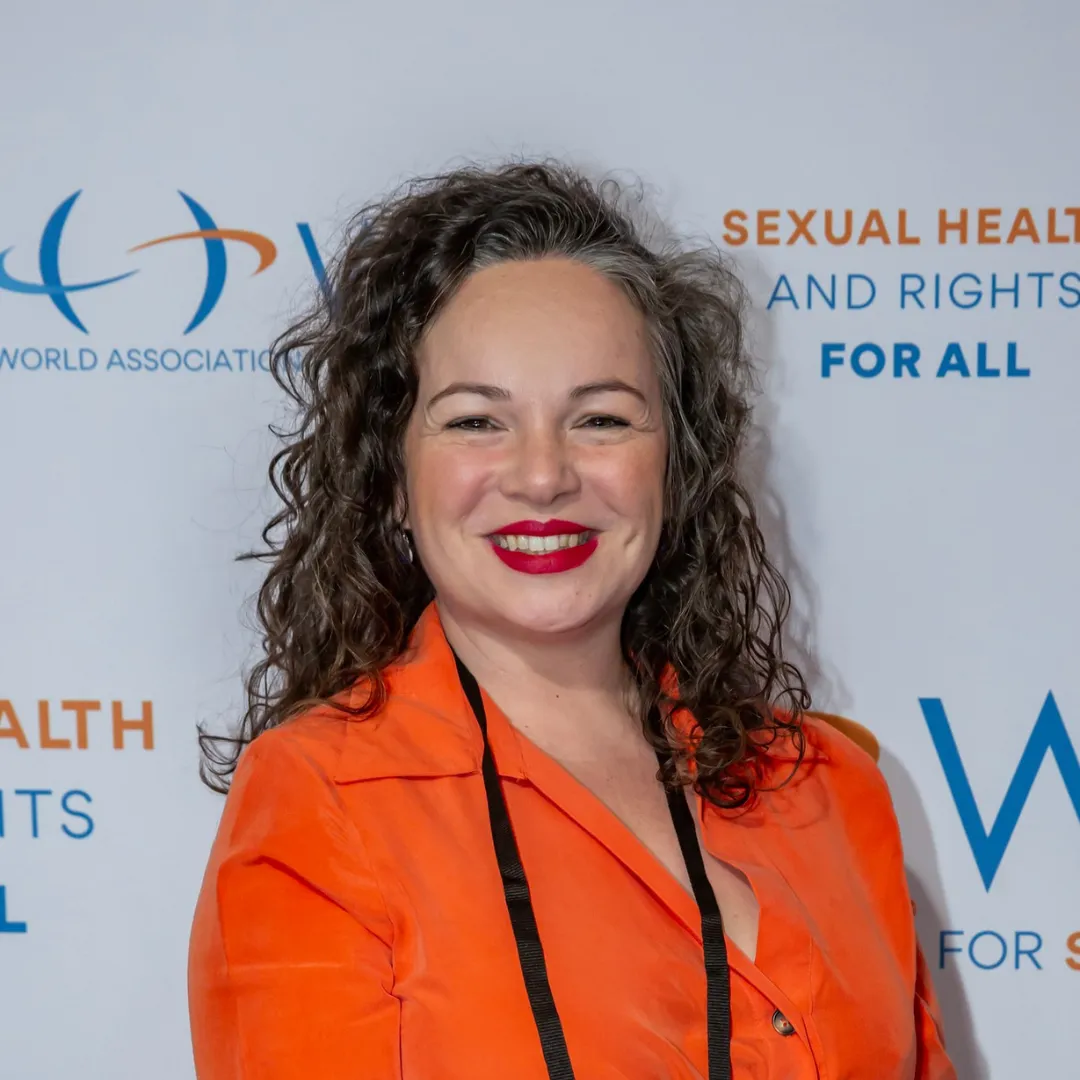
Featuring Suntosh Pillay (Former Chief Clinical Psychologist, eThekwini District, KwaZulu-Natal Department of Health) and Dr Elna Rudolph (Clinical Head, My Sexual Health)
You've thought about getting some support, for the anxiety, for the family tension, for the low hum of exhaustion that comes from being out, or not out, in spaces that don't always feel safe. But you've hesitated. Maybe you've already had one bad experience: a doctor who used the wrong pronoun and didn't apologise, a psychologist who seemed more curious about your transition than your actual problem, a GP who changed the subject the moment you mentioned your partner's name. So you've decided it's easier to just manage on your own.
If that sounds familiar, you're not being difficult, and you're not alone. Hesitating to seek care because you don't know whether it will actually be safe is one of the most common, least discussed barriers to good mental healthcare for LGBTQIA+ people, and there is now a detailed, official answer to what LGBTQIA+-affirming mental healthcare in South Africa should actually look like.
In a recent My Sexual Health webinar, Dr Elna Rudolph hosted Suntosh Pillay, Former Chief Clinical Psychologist for the eThekwini district in the KwaZulu-Natal Department of Health and co-author of South Africa's national practice guidelines for psychology professionals working with sexually and gender-diverse people, to unpack what those newly updated guidelines mean in practice. What follows is the most important content from that conversation, written for you, not just for clinicians.
Why So Many LGBTQIA+ South Africans Still Hesitate to Seek Care
South Africa protected sexual orientation in its constitution before any other country on earth, in the 1993 interim draft, and again in the final 1996 Constitution. By law, this is about as good as it gets. By lived experience, it often isn't. LGBTQIA+ people in South Africa continue to face discrimination, exclusion, and hate crimes, and in 2011, Human Rights Watch went so far as to say the country wasn't doing enough to stop the violence. A progressive law does not automatically produce a safe waiting room.
During the webinar, Dr Rudolph ran a live poll with the roughly 40 healthcare and mental health professionals in the room. About half said they were only "somewhat confident" treating LGBTQIA+ clients. One in four said they weren't sure. That's not a criticism of those individual providers; it's an honest admission from the people whose job it is to help you, and it validates something many LGBTQIA+ people already sense walking into a consultation: training gaps are real, not paranoia on your part.
A second poll of the same audience asked what the biggest barrier to quality mental healthcare for LGBTQIA+ people actually is. Nearly half (48%) pointed to a lack of provider knowledge and training. Societal stigma and discrimination came in close behind. Only 1.8% named something called minority stress, even though, as Pillay pointed out, it's one of the most important concepts for understanding why queer people show up to therapy with more distress in the first place.
Minority stress is the cumulative psychological toll of navigating a world built around the assumption that you're straight and cisgender, the constant low-level vigilance, the small daily decisions about disclosure, the bracing for a bad reaction. It is a recognised driver of anxiety and depression in LGBTQIA+ communities, and it is not a personal failing.
How Psychiatry Got This Wrong
It can help to know that the "problem" was never you. For most of the twentieth century, the problem was psychiatry's own diagnostic manual.

In the 1950s, the first edition of the American Psychiatric Association's Diagnostic and Statistical Manual (DSM) classified homosexuality as a sociopathic personality disturbance, filed under "sexual deviations." The 1960s edition gave it its own category: sexual deviation personality disorder. In 1973, the APA's trustees voted to remove homosexuality from the DSM entirely, and when the decision went to a vote of the full membership the following year, it passed by a margin of roughly 58%. Several newspapers ran the story the next day with the joke that a committee vote had apparently "cured" millions of people overnight. Of course, in truth, the diagnosis didn't disappear because new evidence proved it wrong. It disappeared because enough people in the room finally voted that it should.
The next edition introduced a strange compromise: ego-dystonic homosexuality, a diagnosis that only applied if your sexuality caused you distress. Given the social climate of the 1980s, that described almost everyone. So functionally, the pathology stuck around under a new name. It wasn't until the DSM-IV in 1994, thirty years ago, within living memory for many readers, that sexual orientation disappeared from the manual altogether. At almost exactly that point, a new diagnosis appeared in its place: gender identity disorder, the predecessor to what's now called gender dysphoria. The target of pathologisation shifted from sexual orientation to gender identity rather than disappearing.
A few years ago, The Lancet Psychiatry ran an editorial reflecting on this history, acknowledging the field's troubled record with sexual orientation and gender and calling for more to be done, and the editors specifically pointed to South Africa's national PsySSA guidelines as an example of what good practice now looks like. For a relatively small, resource-constrained psychological society to be cited that way in one of the world's most influential medical journals is, by any measure, a significant marker of credibility.
What "Affirmative Practice" Means, And Why the National Guidelines Just Changed
Affirmative practice means a psychology professional actively affirms a person's sexual orientation and gender identity as a normal part of human diversity, not merely tolerating it, staying neutral about it, or treating it as incidental to the "real" presenting problem.
That phrase is now the backbone of South Africa's official guidance on the subject: the second edition of the Practice Guidelines for Psychology Professionals Working with Sexually and Gender-Diverse People, published by the Psychological Society of South Africa (PsySSA) and formally launched in Cape Town in March 2025. The first edition, released in 2017, ran to 85 pages and 12 guidelines. The update, produced by a team of nine psychologists from PsySSA's African LGBTQIA+ Human Rights Project, grew to roughly 160 pages, built on a decade-long scoping review of African research on the topic, three rounds of practitioner surveys, three multi-day writing retreats, and review by 24 international experts before formal approval by PsySSA's governing structures.
The guidelines have already travelled well beyond South Africa's borders, translated into French for use in Cameroon, adapted in Nigeria, and referenced in parts of Europe, Australia, and New Zealand.
During the discussion, Pillay quoted the formal definition of professional competence used in the guidelines: a combination of theoretical and practical knowledge, cognitive skill, behaviour, and values, applied to a professional standard. Dr Rudolph's response was immediate; that's almost word-for-word what My Sexual Health means by "credible providers being competent, consistent, and accountable." Knowledge alone, she noted, isn't competence; a search engine can recite facts. Competence is what a provider actually does with that knowledge, session after session, with their own biases held up to the light.
The 12 Guidelines for LGBTQIA+-Affirming Mental Healthcare, Explained Simply
The guidelines themselves are organised around 12 principles. They ask psychology professionals to:
Adopt an affirmative stance toward sexual and gender diversity across all aspects of their work.
Ensure non-discrimination in the delivery of services.
Uphold individual self-determination, the client's right to define and disclose their own identity on their own terms.
Recognise normative social contexts, understanding that "normal" looks different depending on culture, religion, and community.
Understand intersecting discriminations, recognising that LGBTQIA+ people's experiences of marginalisation are shaped by multiple overlapping identities, not just sexual orientation or gender identity alone.
Counteract stigma, prejudice, and violence, actively challenging harmful attitudes and practices rather than simply avoiding them.
Recognise multiple developmental pathways, there is no single, correct timeline for understanding one's own sexuality or gender.
Support diverse family structures and relationships, beyond a single template of what a family looks like.
Increase social supports and foster resilience by prioritising relational wellbeing.
Affirm diversity and resist pressure to normalise clients into a narrower mould.
Disclose and rectify personal biases with ongoing practice, not a box ticked once during training.
Enhance practice through continuing professional development, treating the field as one that keeps evolving.
Running through all twelve is a through-line: self-determination not as a one-time formality, but as a living principle, renewed in every session, with every client.
Dr Rudolph put it this way during the webinar: "We don't do pap smears, and then a very special, different kind of pap smear for queer people. We do pap smears in a way that every person, no matter who walks through our door, has a positive experience." That's affirmative practice in one sentence. Not a separate, segregated track of care for LGBTQIA+ patients, but one standard of care, delivered with enough awareness that it actually works for everyone.
"Cultural Humility," Not "Cultural Competence": The Distinction That Changes Everything
If there's one idea worth taking away from the entire conversation, it's this reframe. Cultural competence, as a concept, assumes that with enough training, a provider eventually becomes fully competent, finished, qualified, done learning. Cultural humility assumes the opposite: that no provider, however experienced, will ever fully "arrive," and that the honest, useful stance is to keep learning and to be upfront about the limits of your own knowledge.
"Cultural competence assumes that if we simply have enough training, we'll simply become competent enough... Whereas cultural humility assumes that we'll always never really know enough." ~ Suntosh Pillay
This matters to you as much as it does to the provider. A psychologist who tries to project total expertise and fakes familiarity with terms they don't actually know is a bigger risk than one who says plainly, "I don't know that term, can you help me understand what it means to you?"
Research on patient retention backs this up: people are more likely to stay in care with a provider who admits the limits of their knowledge than one who performs confidence they don't have. You are not asking too much by expecting a provider to be honest about what they don't yet know.
When "Just Respect What They Want" Isn't Actually Respectful
Self-determination, guideline three, sounds straightforward: respect what your client wants for themselves. In practice, Pillay described an ethical trap hidden inside it.
Picture someone who comes to a session and says, in effect: "I don't want to be gay. My family will never accept me. If I come out, I could be in danger. Please just make me normal again." A provider who simply agrees to "help" with that request, in the name of respecting the client's wishes, has not actually upheld self-determination, they've performed a version of conversion therapy, a practice that the World Psychiatric Association, PsySSA, and South Africa's own Johannesburg Declaration Against SOGIE Change Efforts and Conversion Practices (signed by mental health professionals from across Africa in April 2023) all reject as unscientific, ineffective, and harmful.
Genuine self-determination means helping a person work through the fear, the shame, and the very real external danger they may be describing, without trying to engineer them out of who they are. As Pillay put it, the honest, complicated answer is closer to the spirit of the "It Gets Better" message, not a guarantee that things will get better, because for some people, in some contexts, they don't quickly. But a commitment to walking the long, complicated route with someone rather than taking the short, harmful one.

Efforts to revive pathologising narratives about queer and trans identities are resurfacing in several countries, anti-trans rhetoric has gained political ground in parts of Europe and the US, and funding cuts tied to US policy changes have already forced the closure of some HIV and trans healthcare clinics in South Africa. None of this changes the clinical evidence. It does mean the guidelines exist, in part, as a deliberate counterweight to political pressure that has nothing to do with science.
Common Questions
What does "affirming" mean when I'm looking for a psychologist or therapist? An affirming provider actively validates your sexual orientation and gender identity as a normal part of who you are, rather than treating it as neutral, incidental, or something to be "worked through." It shows up in small things, correct pronoun use, intake forms that don't assume a default identity, and a willingness to learn rather than guess.
Is being LGBTQIA+ still classified as a mental illness? No. Sexual orientation was fully removed from the DSM in 1994. It is considered a normal variation of human sexuality by every major psychological and psychiatric body, including PsySSA. (Gender dysphoria, the distress some transgender people experience, distinct from being transgender itself, remains a diagnosis, but being transgender is not.)
What is minority stress, and why does it matter for my mental health? Minority stress is the chronic psychological burden of living in a society structured around the assumption that everyone is straight and cisgender, the ongoing vigilance, the decisions about disclosure, and the anticipation of a bad reaction. It's a well-established contributor to anxiety and depression in LGBTQIA+ people, and recognising it changes how a provider should think about your distress.
How can I tell if a provider is actually affirming, rather than just polite? Real affirmation tends to show up as curiosity without intrusiveness, comfort sitting with topics they haven't encountered before, and an absence of "but what does that mean for your other problem" framing; your identity isn't treated as a side issue to whatever you actually came in for.
Is conversion therapy illegal in South Africa? There is currently no specific law banning conversion practices in South Africa, although they are formally rejected by PsySSA, by South Africa's own Johannesburg Declaration, and by major international health bodies as unscientific and harmful. Advocacy for clearer legal protection is ongoing.
What's the difference between "cultural competence" and "cultural humility"? Cultural competence implies a provider can become fully trained and "finished." Cultural humility assumes a provider will never know everything and instead commits to ongoing learning and honesty about the limits of their own understanding, widely considered the safer, more accurate stance in affirming care.
The Bottom Line
If you've been putting off mental healthcare because you weren't sure it would be safe, that hesitation made sense, and there is now a detailed, evidence-based national standard describing exactly what affirming care should look like, written by South African psychologists and recognised internationally as a model worth following. The history of pathologising queer and trans identities was never about you being wrong. It was about a field that took decades to catch up to what was already true.
Find Affirming Support at My Sexual Health
The My Sexual Health Team includes psychologists, doctors, and other healthcare providers trained in affirming, multidisciplinary care for LGBTQIA+ individuals and their partners. You deserve a provider who treats your identity as simply part of who you are, not the whole conversation, and not something to manage around.
Find a Provider at My Sexual Health.
Want to learn more? Explore the MSH Webinar Library or browse courses at SexologyCourses.com.
For Healthcare Providers: Taking This Further
Recognising the gap between intention and competence is one thing; closing it is another. Suntosh Pillay's team runs training on the updated PsySSA guidelines, ranging from single-day introductions to a five-day intensive workshop, used by government departments, hospitals, and private practices to upskill entire teams at once. The full guidelines document is free to download from PsySSA, alongside South Africa's gender-affirming healthcare guidelines from the South African HIV Clinicians Society, which closely complement it.
Disclaimer: This article is based on the My Sexual Health webinar on queering mental health and the updated national practice guidelines, featuring Suntosh Pillay (Former Chief Clinical Psychologist, eThekwini District, KwaZulu-Natal Department of Health; co-author, PsySSA Practice Guidelines for Psychology Professionals Working with Sexually and Gender-Diverse People) and Dr Elna Rudolph (Clinical Head, My Sexual Health). It is intended for informational and educational purposes and does not replace personalised clinical advice. If you are experiencing distress related to your sexual orientation, gender identity, or experiences of discrimination, please consider speaking with a qualified, affirming healthcare provider.