
Why Does Arousal Disappear Once Sex Actually Starts? | My Sexual Health
You wanted it. You were ready. Then somewhere between anticipation and the actual moment, it vanished. A leading sex researcher explains exactly why — and what it reveals about how your brain is actually wired.
You were thinking about it earlier and felt genuinely interested. But the moment things actually started, something shifted. The feeling faded, your body didn't follow through, or your mind drifted somewhere completely unrelated. Now you're lying there wondering whether something is wrong with you — or with your relationship.
Nothing is wrong with you. What you're describing is one of the most common, least discussed experiences in sexual health, and it has a precise neurological and psychological explanation. Once you understand it, a lot of things about your own body begin to make sense.
In a recent My Sexual Health webinar, Dr Elna Rudolph spoke with Professor Erick Janssen — a researcher at the KU Leuven and one of the world's leading authorities on sexual arousal — about the science of why arousal behaves the way it does. What follows is the most important content from that conversation, written for real people with real questions.
Arousal Is a Process, Not a Switch
One of the most liberating things Professor Janssen said in the webinar is also the most foundational: sexual arousal is not a simple reflex that either fires or doesn't. It is an emotional state — as real and physiologically complex as anxiety, excitement, or grief — shaped continuously by the balance between what's activating your system and what's suppressing it.
Your nervous system is always doing a rapid, mostly unconscious assessment: Is this context safe? Am I present? Is my body under other demands right now? Are there threats — physical, emotional, social — that need more of my attention? Arousal depends on the answers to all of those questions, not just on whether you find your partner attractive or whether you "want" sex in the abstract.
This is why you can feel genuinely turned on by a text message or a fantasy, but lose that feeling when intimacy actually begins. The context changed. The nervous system updated its assessment. This isn't failure — it's the system working exactly as designed.
The key insight from decades of research: Loss of arousal during sex is almost never about lack of attraction or desire. It's about what your nervous system has decided needs more attention in that moment.
The Dual Control Model: Your Sexual Gas Pedal and Brakes
Professor Janssen developed the Dual Control Model of sexual response alongside John Bancroft at the Kinsey Institute. The model has since become one of the most clinically useful frameworks in sexology — and once you understand it, you'll recognise it everywhere.
The model proposes that sexual arousal at any given moment depends on the balance between two competing systems: a sexual excitation system (the accelerator) and a sexual inhibition system (the brakes). Both are always active. In every situation, your brain is simultaneously receiving cues that promote arousal and cues that suppress it, and the experience you have depends on which side is winning.
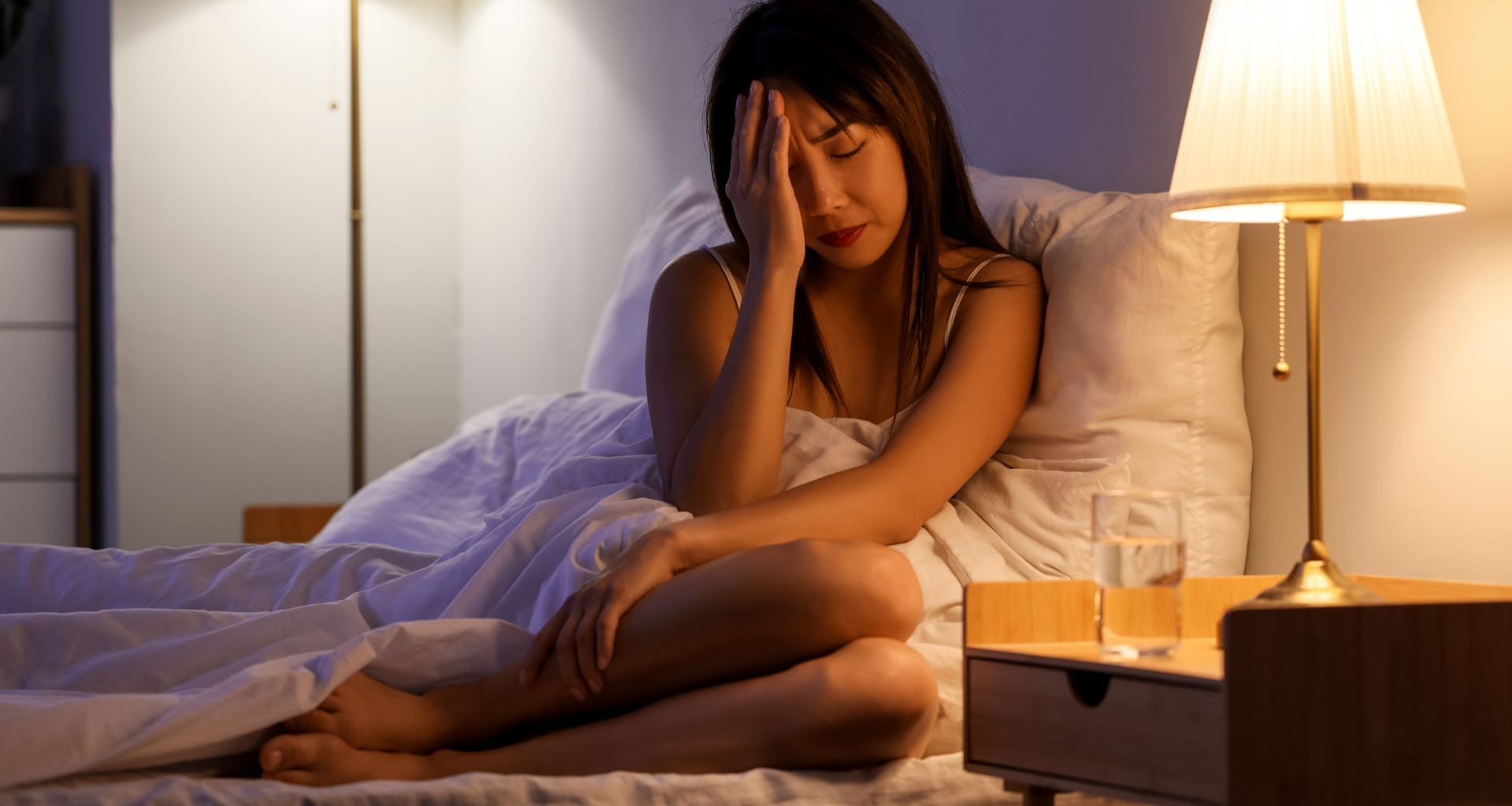
People vary enormously in the sensitivity of both systems — and this variation is normal. Some people have a very responsive accelerator: they become aroused easily, quickly, across many contexts. Others have a more muted accelerator and need specific conditions to be met before arousal builds. On the brake side, some people's inhibition system fires very easily — small distractions, mild anxiety, a slight shift in mood can extinguish arousal almost immediately. Others barely notice those things at all.
"People vary, and we found a lot of support for that variability. The differences among men in sexual excitation are way, way larger than the average difference between men and women. 20 to 30% of women are more easily aroused than 60 to 70% of all men." — Professor Erick Janssen
That last point deserves to sit with you for a moment. The cultural story that men are always easily aroused and women are the ones who struggle is not supported by the data. Individual variation swamps any average gender difference. Your particular wiring — whether you find arousal comes easily or requires very specific conditions — is not a verdict on your sexuality or your health. It is just your pattern.
The Discovery That Changes Everything: Two Completely Different Brakes
Here is the part of Professor Janssen's research that rarely makes it into popular articles — and that Dr Rudolph describes as genuinely changing how she works with patients in the clinic.
When the research team analysed their data on sexual inhibition, they discovered something unexpected: the brakes are not one thing. They split into two distinct factors, which Janssen describes using a vivid analogy.

The Two Types of Sexual Brakes
🦶 The Foot Brake
Steps on hard in response to acute risk or threat. A partner saying something that doesn't feel right. Fear of an STI. Being unexpectedly interrupted. Feeling genuinely unsafe. This brake fires quickly and clearly in response to a specific trigger — and when the trigger resolves, arousal can often return.
✋ The Hand Brake
Slightly engaged all the time. You can still drive with it on — but it's harder going, and you might not understand why. This brake is connected to performance anxiety, self-monitoring, being easily distracted, worrying whether you're pleasing your partner, and a tendency to spectate your own experience rather than be in it. This is the brake most closely linked to ongoing sexual difficulty.
The hand brake is the one that explains so many experiences that feel inexplicable. You're not scared. There's nothing wrong with your relationship. You don't have any obvious reason to be anxious. But a low-level, chronic inhibition is running in the background — and it's just enough to interrupt the process before it gets going, or to pull you out of the moment once it has.
Mindfulness practices, therapy approaches focused on reducing self-monitoring, and learning to tolerate the experience of arousal without evaluating it are all, in essence, working on the hand brake. Which means if you've ever been told to "just relax," what they were really gesturing at — however unhelpfully — was this.
From Clinical Practice
In Dr Rudolph's experience, one of the most relieving moments for couples in therapy is when this framework gives them a neutral language for what's been happening. Instead of "she never wants sex" or "he doesn't find me attractive anymore," there's suddenly a more accurate description: one person's brakes are more sensitive, or the hand brake has been quietly engaged for months. That reframe alone can dissolve years of accumulated resentment and shame.
The One Factor Nobody Talks About Enough: Tiredness
When asked which single factor most impacts sexual arousal across the population, Professor Janssen gave an answer that surprised the room: tiredness. Not trauma, not relationship problems, not hormones — exhaustion. It is, he suggested, probably one of the most prevalent and underacknowledged influences on sexual response in everyday life.
This isn't just a matter of not having energy. Fatigue directly affects the nervous system's capacity to shift into the relaxed, open, socially-engaged state that arousal requires. When you're depleted, your system prioritises survival and recovery. Everything else — including desire — gets deprioritised. If your arousal has been inconsistent and you've been dismissing tiredness as "not a real reason," it may actually be the most honest explanation available.
Responsive Desire: When Your Body Needs to Start Before Your Mind Does
Another concept from the webinar with significant clinical relevance is the distinction between spontaneous and responsive desire. Spontaneous desire is what most people imagine when they think about "wanting sex" — a feeling that arises on its own, without any particular prompt. In responsive desire, interest develops in response to intimacy, closeness, or stimulation that's already begun.
Responsive desire is not a lesser or broken form of arousal. It is an entirely normal pattern — and it is particularly common in long-term relationships, during demanding life phases, and for many women across the lifespan. The problem arises when someone with predominantly responsive desire measures themselves against a spontaneous desire standard and concludes they have a problem. They don't. They simply need different conditions — a context where intimacy can begin before desire has fully arrived, trusting that it may follow.
This is also why "just initiating anyway" is sometimes useful advice, and sometimes not — it depends entirely on whether the person has responsive or spontaneous desire as their primary pattern, and whether the right contextual conditions are present.
What About Hormones? Where Testosterone Fits In
One of the most clinically rich exchanges in the webinar was a discussion about where hormones — specifically testosterone — sit within the dual control framework.
Professor Janssen is careful to note that research on testosterone and desire is more complicated than popular understanding suggests: the correlation between circulating testosterone levels and day-to-day desire is not strong in most studies. However, Dr Rudolph raised a specific clinical picture — perimenopausal and menopausal women with undetectable testosterone levels — where the picture looks different. What these patients typically report after testosterone treatment is not a sudden surge of spontaneous desire, but rather a restored capacity to respond to sexual stimulation. The machinery starts working again.
In Janssen's framework, this places severe testosterone deficiency not on the inhibition side (it's not adding a brake) but on the excitation side (the accelerator's underlying machinery isn't functioning). That distinction matters because it points toward very different interventions — and because it tells a patient something important: "Your brakes aren't broken and your desire isn't gone. Your system just doesn't have the resources right now to respond."
The Relationship Factor: When Companionate Love Gets Mistaken for Lost Desire
Professor Janssen referenced psychologist Elaine Hatfield's distinction between passionate love and companionate love — and the clinical misunderstanding it generates almost universally. The early phase of a relationship is typically characterised by passionate love: high intensity, frequent spontaneous desire, erotic electricity. As a relationship deepens, companionate love grows — warmth, security, partnership, deep knowing. Many people interpret this natural shift as "desire disappearing" or "something going wrong."
The research shows these two forms of love are largely independent of each other. Companionate love doesn't replace passionate love — they coexist and fluctuate separately over time. People in deeply companionate relationships can and do experience erotic intensity; it may simply require more intentional conditions rather than arising automatically. Sexual satisfaction in long-term relationships is often very high precisely because of, not despite, the depth of companionate connection — when couples stop expecting sex to look the same as it did in year one.
Common Questions
Why do I get turned on thinking about sex but then lose it when it actually happens?
Because the context changed. Anticipation happens in a low-pressure mental space; the actual moment introduces new variables — self-consciousness, performance pressure, sensory input that doesn't match the fantasy, or simply the body's competing demands. The nervous system updates its assessment continuously, and sometimes the update tips away from arousal.
Does my partner think I'm not attracted to them if I lose arousal?
Almost certainly not — and the research confirms that loss of arousal is rarely about attraction. It is worth having a calm, non-pressured conversation about it, because partners often do draw that conclusion without it being accurate. Understanding the dual control model together can reframe the experience from personal rejection into a shared puzzle worth solving.
Can stress and exhaustion really cause loss of arousal — even if I want sex?
Yes. The nervous system cannot simultaneously prioritise threat-response and sexual response. Stress and exhaustion are genuine physiological brakes, not excuses. Professor Janssen specifically named tiredness as one of the most prevalent and underestimated influences on sexual arousal in everyday life.
Is it normal to need intimacy to start before desire arrives?
Completely. This is responsive desire, and it is a normal and common pattern — not a deficit. For people with this pattern, waiting until spontaneous desire appears before initiating intimacy often means waiting indefinitely. Desire may genuinely need the physical and emotional experience of closeness to emerge.
When does loss of arousal become something worth discussing with a provider?
When it is persistent, causing personal distress, or creating significant difficulty in a relationship. Occasional variability is entirely normal. But if loss of arousal is a consistent pattern that's affecting your confidence, your relationship, or your quality of life, a credible sexual health provider can help you identify which part of the system — accelerator, foot brake, hand brake, hormonal, psychological — is most likely driving it.
What This Actually Means for You
Sexual arousal is not a performance. It is not a loyalty test for your relationship, a measure of your attractiveness, or a verdict on your health. It is your nervous system's continuous, dynamic response to context — and context includes your tiredness, your stress load, your history, your level of self-monitoring, what happened today, and what's quietly running in the background of your mind.
Understanding which brake is most active for you — the foot brake that fires at specific triggers, or the hand brake that's always slightly engaged — is genuinely useful clinical information. So is knowing whether you tend toward spontaneous or responsive desire, and whether your accelerator is highly sensitive or needs very specific conditions to activate. None of these are character flaws. They are your particular pattern.
And patterns, once understood, can almost always be worked with.
Understanding Your Pattern Is the First Step
If you recognise your experience in what you've read here, a My Sexual Health provider can help you understand your specific profile — which brakes are most active, what your desire style looks like, and what conditions your particular nervous system actually needs. Without judgement, and without assuming something is broken.
Find a Provider at My Sexual Health
This article is based on the My Sexual Health webinar Understanding the Brakes and Accelerators of Sex, featuring Professor Erick Janssen (KU Leuven) and Dr Elna Rudolph (Clinical Head, My Sexual Health). It is intended for informational purposes and does not replace personalised clinical advice.