
What Is Endometriosis? Symptoms, Diagnosis and Treatment in South Africa
190 million women worldwide live with endometriosis. Most wait years, sometimes over a decade, for a correct diagnosis. A leading surgical specialist explains why, and what patients and providers need to know right now.
Featuring Dr Viju Thomas (Head of MAGS Unit, University of Stellenbosch; President, SASGE) & Dr Elna Rudolph (Clinical Head, My Sexual Health)
You've been told the pain is normal. That periods are supposed to be uncomfortable. That you're sensitive, or anxious, or that the tests came back fine. But something is wrong, and you've known it for years.
If that experience sounds familiar, you are not alone, and you are not imagining it. Endometriosis is one of the most common gynaecological conditions in the world, affecting an estimated 190 million women globally. It is also one of the most consistently underdiagnosed, misdiagnosed, and misunderstood, not because it is rare or subtle, but because of significant gaps in medical education, access to skilled specialists, and the widespread normalisation of women's pain.
March is Endometriosis Awareness Month. In a recent My Sexual Health webinar, Dr Elna Rudolph spoke with Dr Viju Thomas, Head of the Minimally Invasive Gynaecological Surgery (MAGS) Unit at the University of Stellenbosch, President of the South African Society of Gynaecological Endoscopists (SASGE), and a leading authority in laparoscopy, robotic surgery, and neuropelviology, about what patients and providers most urgently need to understand. What follows is the most important content from that conversation.
First: What Is Endometriosis?
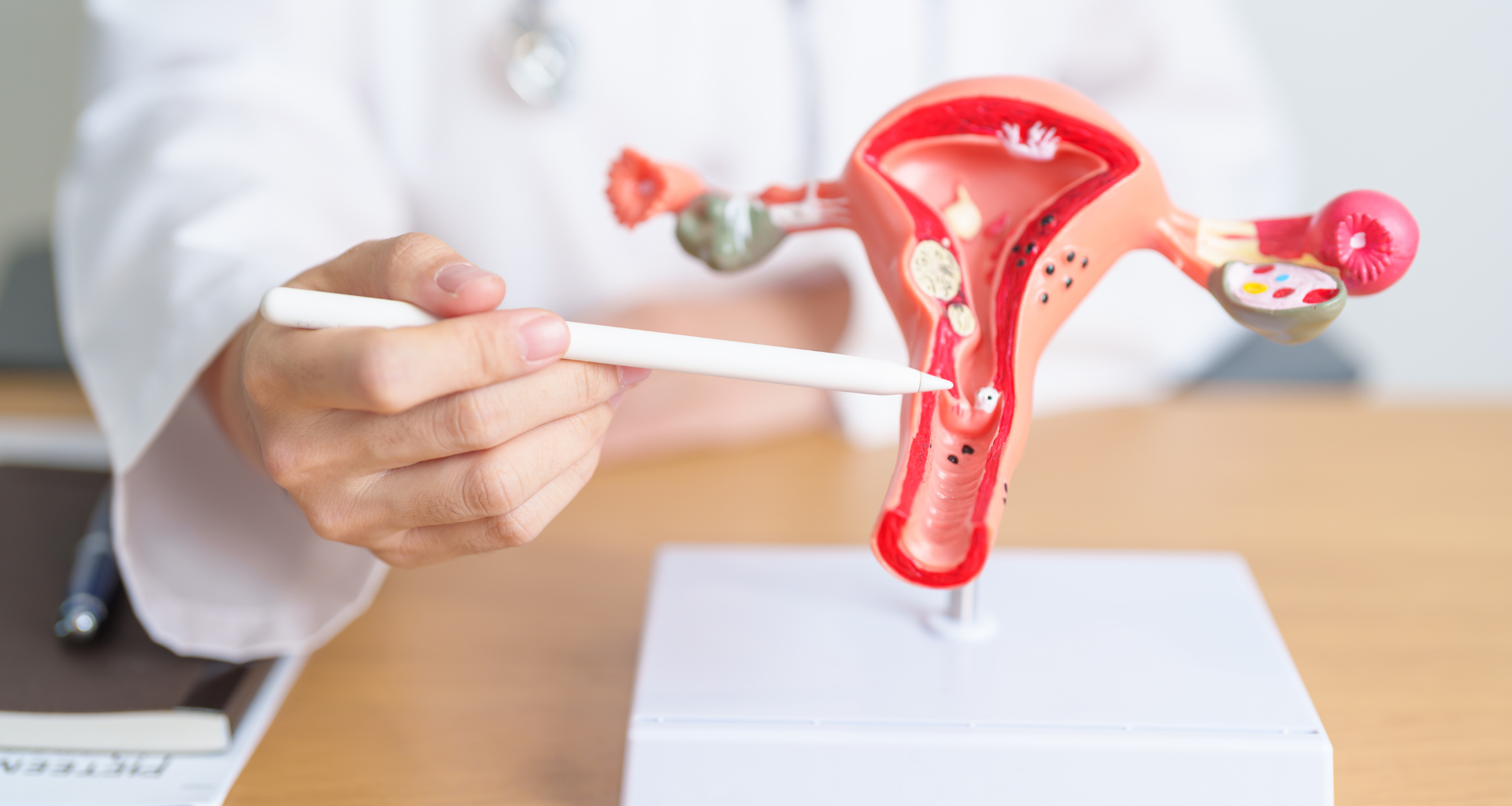
Endometriosis occurs when endometrial-like tissue, the type of tissue that normally lines the inside of the uterus, grows outside the uterus. It most commonly develops in the pelvis and abdomen, attaching to structures including the ovaries, fallopian tubes, bladder, rectum, and the ligaments supporting the uterus. In some cases it extends further, to the bowel, diaphragm, or beyond.
The tissue responds to hormonal cycles the way the uterine lining does: it thickens, breaks down, and bleeds. But because it has nowhere to go, it causes inflammation, scarring, and the formation of adhesions, bands of fibrous tissue that can cause organs to stick together. Over time, this process drives both pain and damage.

A common myth: The long-held theory that endometriosis is caused by retrograde menstruation, menstrual blood flowing backwards through the fallopian tubes, is not supported by current evidence. As Dr Thomas puts it plainly: "That theory doesn't hold much water." The more current understanding points to a combination of genetic, immunological, and environmental (epigenetic) factors. There is no known way to prevent it. And no, doing yoga inversions while menstruating will not cause it.
The Diagnosis Problem: Why It Takes So Long
The average delay between a woman first experiencing symptoms and receiving a correct diagnosis of endometriosis is between seven and ten years. In many parts of the world, including South Africa, it is longer. This is not primarily a technological failure, it is a failure of awareness, education, and clinical prioritisation.
Dr Thomas identifies several compounding reasons. First, the symptoms of endometriosis overlap significantly with other conditions: irritable bowel syndrome, interstitial cystitis, pelvic inflammatory disease, and primary dysmenorrhoea all share features with endometriosis. Clinicians without specific training may reach for one of those labels without considering, or ruling out, endometriosis.
Second, undergraduate and postgraduate medical curricula cover endometriosis inadequately. As Dr Thomas notes from his own experience teaching medical students: the knowledge base most doctors enter practice with is basic at best. This is beginning to change, but slowly.
Third, and perhaps most insidiously, many women with endometriosis have been told their pain is normal. They have internalised that message, stopped reporting, and delayed seeking further investigation. Pain that persists beyond the menstrual cycle, pain during sex, pain with bowel movements: these are not normal.
Key insight: The most important thing to understand about endometriosis symptoms: they do not correlate with disease severity. A woman with stage one endometriosis can be in debilitating pain. A woman with stage four may have had no pain at all, and only discovers she has endometriosis when she cannot conceive. Symptom intensity is not a reliable guide to how much disease is present
Recognising The Symptoms: What To Watch For
Endometriosis presents differently in different people, and some women are entirely asymptomatic until a specific trigger, often fertility challenges, brings the condition to light. The two broad presentations Dr Thomas describes are patients with quality-of-life symptoms (primarily pain) and patients with infertility, sometimes with no pain at all. Many people experience both.

Symptoms That Warrant Investigation
Severe menstrual pain: Pain that interferes with daily function, school, work, social life. Pain that requires strong analgesia.
Non-cyclical pelvic pain: Pain that persists outside the menstrual period, lasting six months or more. This may be a sign of disease progression, not just severe periods.
Deep pain during sex: Specifically, pain felt deep inside during penetration, often related to endometrial tissue in the rectovaginal or retrocervical area.
Painful bowel movements: Particularly around menstruation, or persistent. May indicate bowel involvement, one of the more serious presentations requiring specialist assessment.
Unexplained infertility: Endometriosis is present in a significant proportion of women with unexplained infertility, and is often silent until fertility is affected.
Fatigue and bloating: Chronic fatigue in endometriosis is real, and has neurological, hormonal, and sleep-related drivers. It is not "just" tiredness. It is the body under sustained physiological stress.
Want to go deeper? The MSH webinar on endometriosis is just one of over 50 evidence-based sessions available in the MSH Ultimate Webinar Bundle, covering sexual pain, pelvic health, menopause, fertility, and much more. All 50+ webinars, two years of access, for just R500.
Get the Ultimate Webinar Bundle.
The Fatigue Nobody Explains Properly
Fatigue is one of the most commonly reported, and most commonly dismissed, symptoms of endometriosis. Dr Thomas offers a more detailed explanation than most patients have ever been given.
When endometrial tissue invades or compresses pelvic organs, the bladder, the rectum, the ureters, those organs' nerve supply becomes affected. Over time, this drives what Dr Thomas describes as sympathetic overdrive: a chronic activation of the body's stress-response system that is physiologically exhausting. Women with significant disease may show signs of this, changes in sweating, pupil responses, and a baseline level of fatigue that no amount of sleep seems to resolve.
Pain-disrupted sleep is an additional and obvious driver. And diet, often compromised in women who are depleted, in pain, and emotionally exhausted by years of being dismissed, compounds the picture further. Dr Thomas is direct about this: eating in ways that are anti-inflammatory, antioxidant-rich, and nutritionally complete is an important part of the management.
"If we get the diet right, you could probably eat your medication. I truly believe that if we eat correctly, we are probably going to change a lot of how this disease can be managed." - Dr Viju Thomas
The Investigation: What Testing Actually Tells You
For many years, the diagnostic gold standard for endometriosis was a diagnostic laparoscopy, a surgical procedure in which a camera is inserted into the abdomen to visualise endometrial tissue directly. Histological confirmation (biopsy) remains definitive. But the reality in South Africa, and across much of the world, is that access to skilled laparoscopic surgeons is limited, and requiring surgery before treatment begins means millions of women receive no diagnosis at all.
Guidelines have shifted accordingly. A clinical diagnosis, based on symptoms and response to hormonal treatment, is now considered acceptable in many circumstances, particularly where specialist access is limited. Treat, observe the response, and refine the diagnosis over time.
What has also changed significantly is the role of ultrasound. In the right hands, and Dr Thomas is precise about this qualification, transvaginal ultrasound is now considered equivalent to MRI for endometriosis imaging. An experienced operator can visualise pelvic nerves, assess ovarian involvement, evaluate the rectum, and determine whether structures like the bladder or ureters are affected. In some European centres, MRI has been largely replaced by ultrasound for pre-surgical planning.
Important note on ultrasound: A normal ultrasound does not rule out endometriosis. It can identify disease but cannot exclude it. If you have been told, based on a normal ultrasound, that you definitely do not have endometriosis, that conclusion is not supported by the evidence. Push for further assessment.
The Surgeon Question: Why It Matters Who Operates
This is the part of the conversation that Dr Thomas is most direct about, and that patients most need to hear.
Not all gynaecologists are equipped to treat endometriosis surgically. This is not a criticism of the profession, it is a function of training, volume, and subspecialisation. A gynaecologist whose primary work is obstetrics will not have the surgical exposure to endometriosis that a dedicated minimally invasive specialist has. Studies confirm that clinicians who dabble in endoscopy surgery miss disease, sometimes stage four disease, that an experienced specialist identifies immediately.
Dr Thomas recounts being present in theatre where a surgeon assessed the operative field as normal while he could clearly see advanced disease. This is not uncommon. Effective pattern recognition often only develops through high-volume, focused surgical experience.
The implication for patients is this: if surgery is indicated, seek out a specialist whose primary focus is endometriosis. In South Africa's major cities, such specialists exist. The MSH team can help connect you with appropriate referrals.
"If your gynaecologist is predominantly doing obstetrics, there's a very good chance they are not capable of doing your endosurgery. You need high numbers. Experience, experience, experience." - Dr Viju Thomas
Minimally Invasive And Robotic Surgery: What The Difference Is
All endometriosis surgery should, in Dr Thomas's view, be performed using minimally invasive techniques, meaning laparoscopic (keyhole) rather than open abdominal surgery. The visualisation available through a laparoscope, compared to open surgery with the naked eye, is not comparable. Structures including pelvic nerves and ureters can be identified and protected in ways that open surgery simply does not allow.
Robotic surgery takes this further. The precision of robotic instruments, their dexterity, their range of motion, is particularly valuable in complex cases where endometrial tissue has infiltrated deeply or is near critical structures. The learning curve for laparoscopic surgery is approximately ten years; for robotic surgery, it is closer to two. Dr Thomas is currently the only robotic endometriosis surgeon practising in Africa, and he uses the technology both in the government sector at Tygerberg Hospital and in private practice.

Endometriosis And Fertility: What To Know Before You Wait
Fertility is among the most emotionally charged dimensions of an endometriosis diagnosis, and the decisions are genuinely complex. Dr Thomas offers several principles worth understanding.
Surgery is not automatically the right answer for fertility preservation, and in some cases, particularly where ovarian reserve has already been compromised by previous surgeries, further surgery may do more harm than good. The decision whether to pursue excision surgery or move directly to assisted reproductive technologies like IVF needs to be made by a fertility specialist and an endometriosis surgeon together, with the patient's specific situation and timeline at the centre.
For younger women not yet trying to conceive, emerging evidence suggests that disease progression in endometriosis is most rapid between the onset of symptoms and around age 25 to 26. This is shifting thinking about early intervention — not just hormonal suppression, but potentially surgical excision during that window, followed by suppression, to reduce the total burden of disease a woman carries into her reproductive years. This is not yet a formal guideline, but it is an active area of clinical consideration.
Egg freezing is increasingly discussed with younger patients, particularly those who are not in a relationship or who are delaying pregnancy. It is not the right conversation for every patient at every age, but it is worth raising with a fertility specialist sooner than most women think.
From Clinical Practice: Dr Rudolph notes that at My Sexual Health, one of the most significant sources of relief for patients with long-standing endometriosis has been pelvic health physiotherapy. The chronic sympathetic overdrive that Dr Thomas describes — the neurological activation that drives fatigue and heightened pain sensitivity — responds well to the downregulation techniques that skilled pelvic physios offer. If you have been managing endometriosis for years and have never seen a pelvic physiotherapist, that referral may be one of the most valuable steps you take.
Common Questions
Can a normal ultrasound confirm I don't have endometriosis?
No. Ultrasound can identify endometriosis, particularly in experienced hands, but it cannot rule it out. A normal result does not mean the disease is absent. If your symptoms are consistent with endometriosis, a normal ultrasound should not be the end of the investigation.
My pain is severe but I was told I only have stage one endometriosis. Does that mean it's not serious?
The staging system (1–4) does not correlate with symptoms. Severe pain at stage one is real and valid. Equally, significant disease at stage four can sometimes be asymptomatic. The stage describes the extent of disease visible at surgery, not how much pain you should or shouldn't be experiencing.
Is there anything I can do to prevent endometriosis from developing?
No. Current evidence points to genetic, immunological, and epigenetic factors that are not modifiable. You did not cause this, and there is nothing you could have done differently. What you can influence is how the condition is managed once it is identified.
When should I push for a referral to a specialist for endometriosis?
If your symptoms are not adequately controlled with first-line hormonal treatment, if you have any ultrasound findings suggesting organ involvement (bladder, bowel, ureters), if your fertility is a concern, or if you have been symptomatic for years without a clear diagnosis, these are all reasons to seek a specialist endometriosis centre. Silent involvement of the ureters, for example, can lead to kidney damage with no obvious symptoms. This is not a condition to monitor passively over years without specialist input.
What is the difference between endometriosis and adenomyosis?
Endometriosis refers to endometrial-like tissue growing outside the uterus. Adenomyosis refers to endometrial tissue invading the muscle wall of the uterus itself. They share similar symptoms and can coexist, but they are distinct conditions with different management approaches. Importantly, a hysterectomy treats adenomyosis but is not a cure for endometriosis, because endometriosis by definition lives outside the uterus.
Want To Learn More? The Msh Ultimate Webinar Bundle
If this conversation on endometriosis opened up questions about other aspects of sexual health, for yourself, your relationships, or your practice, the My Sexual Health Ultimate Webinar Bundle gives you access to over 50 hours of evidence-based sexual health education in one place.
Topics covered include sexual pain, menopause, libido, men's health, pelvic health, infertility, gender diversity, relationships, consent, orgasms, and much more, all delivered by qualified healthcare professionals.
All 50+ MSH webinars for only R500.
Get the Ultimate Webinar Bundle.
The Bottom Line
Endometriosis is common, serious, and treatable, but only if it is found. The years many women spend being dismissed, misdiagnosed, or undertreated are not inevitable. They are the result of gaps in knowledge and access that are closing, but slowly.
If you have been living with pain you have been told to accept, with fatigue nobody can explain, with intimacy that hurts, or with fertility challenges that have gone unattributed, endometriosis is worth investigating properly.
You deserve that level of care. And it exists.
Find Credible Sexual Health Support at My Sexual Health
The My Sexual Health team includes pelvic health physiotherapists, sexual health doctors, and psychologists with real experience in the sexual and relational impact of endometriosis. We can also connect you with appropriate surgical referrals. You don't have to navigate this alone.
DISCLAIMER
This article is based on the My Sexual Health webinar Endometriosis: Diagnosis, Treatment and Sexual Health, featuring Dr Viju Thomas (Head of MAGS Unit, University of Stellenbosch; President, South African Society of Gynaecological Endoscopists) and Dr Elna Rudolph (Clinical Head, My Sexual Health). It is intended for informational and educational purposes and does not replace personalised medical advice. If you are experiencing persistent pain, fertility concerns, or symptoms consistent with endometriosis, please consult a qualified healthcare provider.